By Cira Mozos, Founder and Executive Director
Kosmovision Foundation began with a clear purpose. We wanted to create sustained and accessible creative environments where young people can strengthen expression, confidence, agency, belonging and meaningful participation in community life. From the beginning, our work has developed at the intersection of Creative Health, prevention and participation.
Throughout our first year, we have been building more than a collection of programs. We have been developing an organisation-wide Creative Health Practice & Evidence Framework – a shared foundation for our programs, partnerships, facilitator practice and evaluation. It defines what we do and why our creative methods matter. It also sets out the quality and safety principles that guide us, and how we will keep learning from participants, practice and evidence.
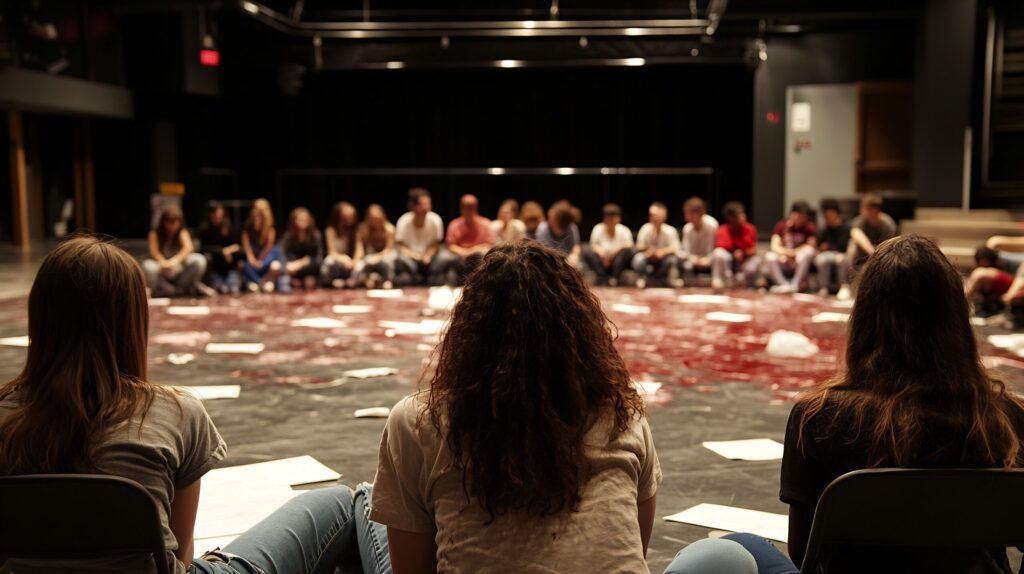
Within our model, writing, comics, visual arts, storytelling, theatre and worldbuilding are not simply activities or final products. They are different creative languages. Through them, participants can notice, express, reflect, explore perspectives, make choices, imagine alternatives and contribute alongside others.
In practice, this means creating structured, artist-led environments that are trauma-informed, neuroinclusive and accessible. We offer participants choice in how they engage, communicate and create, without pressure to disclose personal experiences. Someone may begin with a character, an image, a fictional world or a shared story. Over time, they develop creative voice, connection and a stronger sense of possibility.
Kosmovision does not provide therapy or replace clinical support. We work upstream and alongside health, youth, education and community services, creating pathways into connection, creativity and participation. Our approach recognises that wellbeing takes shape not only within individuals, but also through relationships, environments and opportunities to belong and contribute.
A Significant Development for Creative Health
We are therefore delighted to see the development of the Creative Health Alliance Australia project.
Creative Australia has partnered with SANE Australia, RMIT and the CREATE Centre at the University of Sydney to strengthen Australia’s creative health infrastructure. Together, they will develop a national Creative Health Quality Framework, a practitioner toolkit and a searchable directory of creative health practitioners.
The sector will help shape the national framework through consultation and collaboration. It will reflect the different settings in which creative health practice takes place, guided by Aboriginal and Torres Strait Islander leadership, ways of working and understandings of culture and health.
This represents an important opportunity to build shared principles around quality, safety, professional practice and accessibility. It also recognises the contribution creative practitioners already make to individual and community wellbeing. Learn more about Creative Health Alliance Australia.
We developed Kosmovision’s organisational framework independently, specifically for our community-based work. However, we are genuinely encouraged to see Australia moving in a direction that reflects many of the principles we have been working to embed. These include a clear scope of practice, participant choice, accessibility, safeguarding, reflective practice, evidence building and sustainable support for creative practitioners.
For a young and emerging organisation, this alignment is deeply meaningful. It strengthens our confidence that the work we have been developing belongs within a growing field that connects creative practice, health promotion and community participation.
Contributing a community perspective
Kosmovision’s Founder and Executive Director, Cira Mozos, has been invited to contribute to the development of the national framework through the Specialist Consultation Group.
We are grateful for the opportunity to bring a community-based perspective to this important conversation. We will draw on our emerging practice with young people, neurodivergent communities and people who may experience barriers to conventional arts, social or wellbeing environments.
It is also an opportunity to consider what quality looks like beyond formal health settings. This includes community centres, creative studios, youth spaces and local programs, where relationships, trust and belonging develop over time.
Part of a growing international movement
Australia is joining a wider international movement recognising the relationship between creativity, health and community life.
The World Health Organization has synthesised evidence from more than 3,000 studies. It identifies important roles for the arts in health promotion, prevention and the management of health across the lifespan.
In the United Kingdom, the National Centre for Creative Health has helped advance a whole-system approach connecting creative practice with healthcare, local authorities, education and community organisations. Its work emphasises that Creative Health should be person-centred, accessible and supported through collaboration across sectors.
These international developments show what becomes possible when creative participation is recognised as part of a broader wellbeing ecosystem, rather than treated as an optional extra.
What this could mean for communities
A national quality framework is more than a professional document. It can help create a shared language between artists, community organisations, councils, schools, youth services and health providers. It can make good practice more visible, strengthen safeguards, support practitioners and create stronger foundations for collaboration and sustainable investment.
For communities, this could mean more opportunities to access thoughtful, inclusive creative programs close to where people live. It could also help establish clearer pathways between formal services and community participation, particularly for people who may not feel comfortable or included in conventional environments.
Most importantly, it can support the creation of places where people are welcomed for their ideas, stories, perspectives and creative contributions – not because they have a diagnosis, or need to explain everything they are experiencing.
We are proud to contribute to this emerging conversation and excited about what this shared direction could make possible for Creative Health practitioners, organisations and communities across Australia.