Storytelling & Expression
Storytelling & Expression is a community-based narrative pathway within Creative Wellbeing & Participation. It is designed for young people and young adults who may benefit from accessible storytelling, supported communication, creative expression and inclusive participation.
The pathway welcomes participants with disability, verbal participants, and young people with diverse communication, sensory, mobility or support needs.
Storytelling is used as a flexible method for communication, identity expression, authorship and social participation.

What this pathway offers
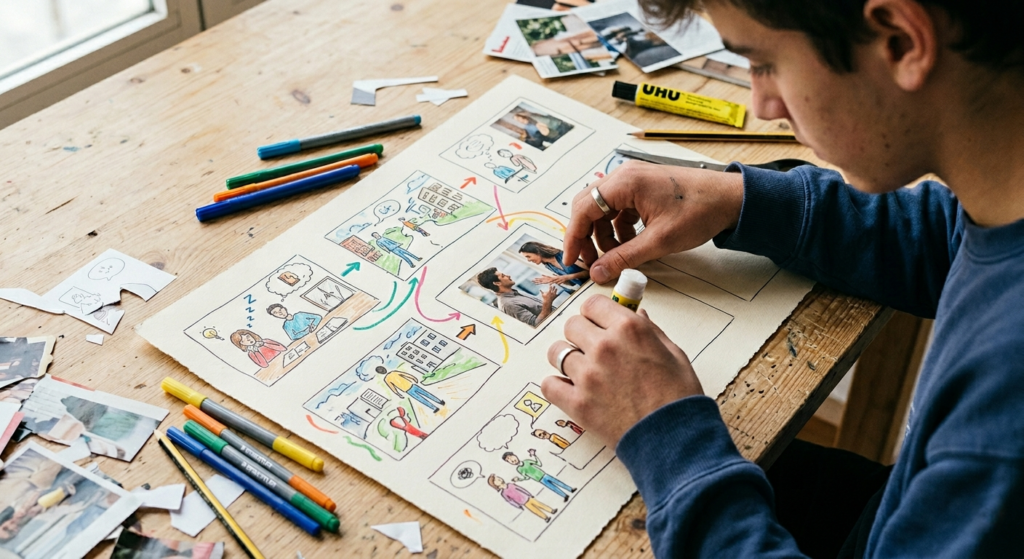
Accessible storytelling through tactile, visual, sensory and digital methods
Open to verbal participants and different communication styles
Low-pressure entry points into narrative, expression and authorship
Structured, community-based sessions that support social participation
Within Kosmovision’s wider creative wellbeing framework, this pathway uses storytelling as a flexible method for communication, identity expression, authorship and participation.
Sessions may combine tactile, visual, sensory, object-based, performative and digital methods so that participants can engage in ways that are appropriate to their communication profile, preferred modes of expression and level of support.
The emphasis is not on technical mastery or formal media training, but on creating accessible opportunities for participants to communicate, develop stories and characters, express preferences and identity, and contribute to shared creative outcomes.
How the Lab works in practice
Morning sharing visuals or supported communication.
Creative warm-up through low-demand sensory, visual, object-based
Structured story activity supporting character-making, sequencing.
Everyday participation through breaks, turn-taking and supported decision-making
Reflection and documentation through photos, short clips.
What a session can include
Methods used across the pathway

- Puppet and object storytelling
- Stop motion and visual sequence
- Sensory storytelling through sound, textures, mood and objects
- Character, world and shared scene creation
- Accessible digital storytelling tools such as Pictello, Canva, Book
- Creator and simple stop motion apps

What participants may explore
- Communication through multiple modes, including AAC, gesture, visual, sensory and digital forms
- Identity expression and symbolic representation
- Sequencing, cause and effect, and narrative development
- Confidence, authorship and supported decision-making
- Social connection, belonging and participation in group processes
What this program offers
Program Pathways
Optional cross-pathway method
Embodied Storytelling and Performative Exploration may appear across the pathway as a flexible cross-method. This can include role play, immersive scene-making, dialogue, monologue, voice, movement and character embodiment. It should support storytelling and shared creative experience without turning the first pilot into a separate performance program.